

Corpus of Ptolemaic Inscriptions Part I: Greek, Bilingual, and Trilingual Inscriptions from Egypt - Volume 2, The Fayum and the Valley (Nos. 207-409)
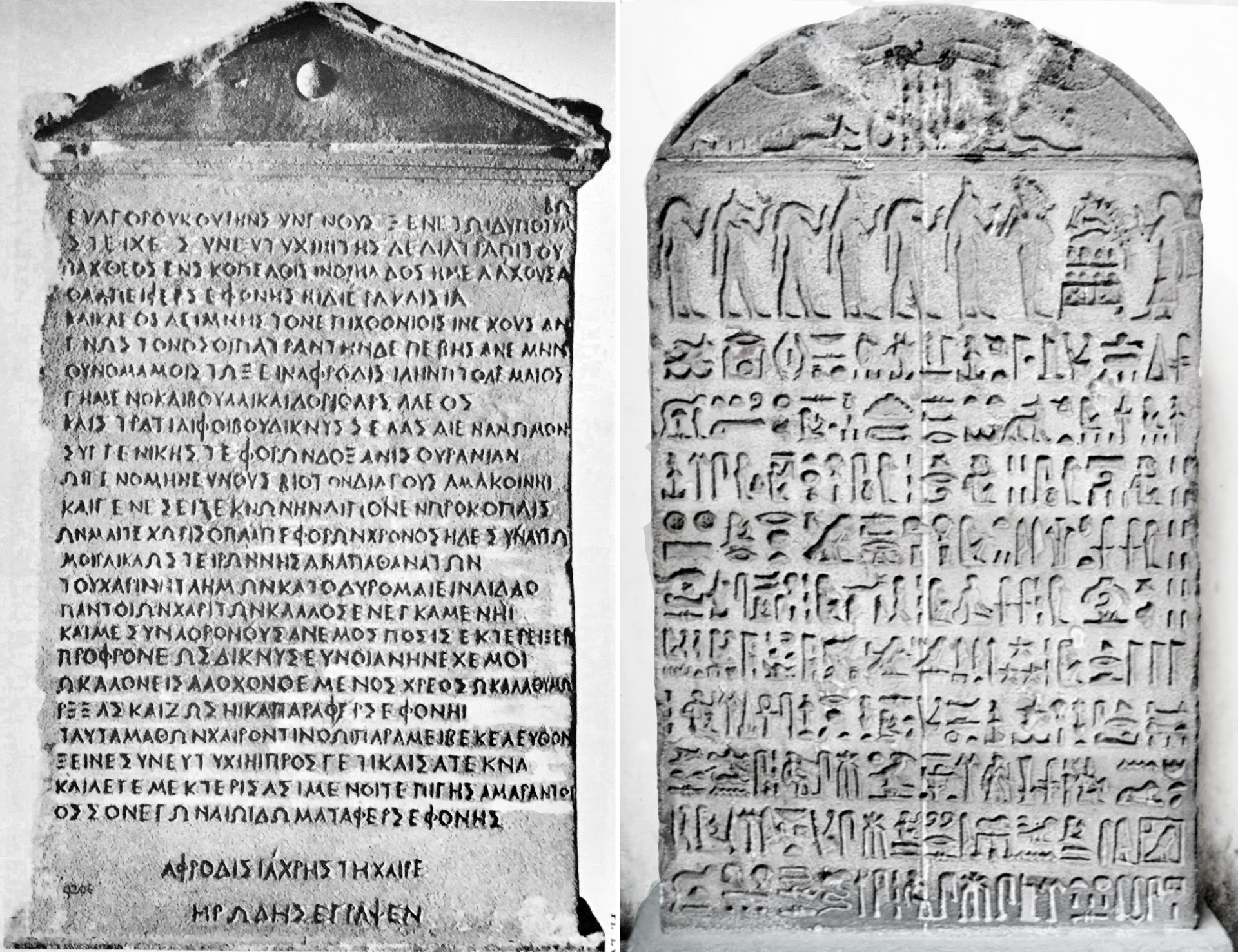
A Greek metrical epitaph for Aphrodisiac and a matching Hieroglyphic stele from the same tomb for her under her Egyptian name Hathor-¬iy-¬ti, from Apollonopolis (Edfu) in Upper Egypt. Both stelai are in the Egyptian Museum in Cairo and date to the late second century BC.





By Alan K. Bowman, CharlesV. Crowther, Simon Hornblower, Rachel Mairs & Kyriakos Savvopoulos
This is the second of three volumes of a Corpus publication of the Greek, bilingual and trilingual inscriptions from Ptolemaic Egypt covering the period from Alexander's conquest in 332 BC to the fall of Alexandria to the Romans in 30 BC. This volume contains 221 numbered items (some covering multiple short texts) from the Fayum and Middle and Upper Egypt (including the Thebaid). It presents up-to-date scholarly revisions of the texts with translations, full descriptions, and commentaries, drawing on material originally collected by the late P. M. Fraser. The inscriptions from the Fayum illustrate the development of towns and villages in a region which was particularly re-shaped by Greek immigrants, while the texts from Upper Egypt and the Thebaid reflect the persistence of indigenous Egyptian traditions and their interaction with the impact of Greek culture. The inscriptions range from copies of major priestly and royal decrees, civic administrative documents, and asylum petitions involving Egyptian and Greek temples and cults, to dedications to gods, monarchs, and private individuals, funerary texts, pilgrimage notices, and verse inscriptions including re-editions and reassessments of the Isis hymns from Narmouthis and the Herodes funerary epigrams from Edfu together with their Hieroglyphic counterparts. The Corpus supersedes older publications and other partial collections organised by specific region or theme, and offers for the first time a full picture of the Greek and multilingual epigraphic landscape of the Ptolemaic period. It will be an indispensable resource for new and continuing research into the history, society and culture of Ptolemaic Egypt and the wider Hellenistic world.
Find more information from OUP.